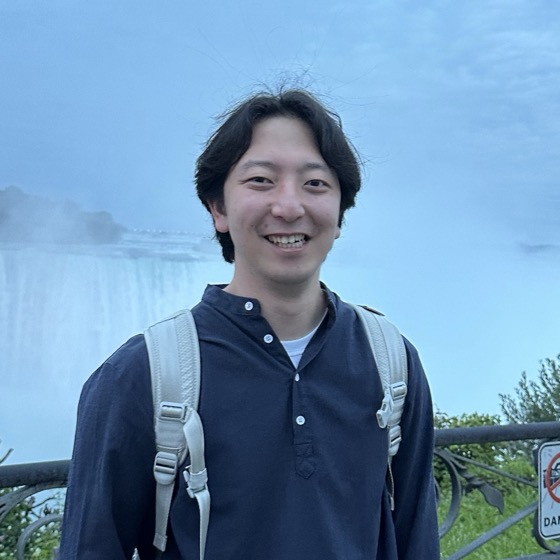
Seokhyun Moon
InnoCORE Postdoctoral Researcher, KAIST · Intelligent Chemistry Lab
I am an InnoCORE postdoctoral researcher at KAIST working on AI-driven drug discovery. I build deep learning models for the structures and interactions of biomolecular complexes, and I am now working on agentic frameworks that go beyond single-target-based in silico drug discovery.
Research
My research began with protein-ligand interaction prediction. In PIGNet and PIGNet2, I developed physics-informed models for binding affinity scoring and virtual screening, with a focus on generalization to unseen systems. I then moved from scoring given structures to predicting the structures themselves, working on co-folding and biomolecular complex structure prediction. I am one of the main developers of K-Fold, which models complex formation as a transition from the unbound components to the bound state.
In parallel, I am interested in molecular generative models for lead optimization and de novo drug design.
More recently, I have been working on agentic frameworks that aim to overcome the limitations of conventional single-target-based in silico drug discovery, and I am also interested in phenotypic drug discovery using virtual cells, where my previous work can be effectively leveraged. MoAgent, a hypothesis-driven multi-agent framework for drug mechanism-of-action discovery that I co-authored, is one example of the agentic direction.
Publications
* Equal contribution · † Corresponding author
Predicting conformational changes induced by biomolecular interactions
Biomolecular interactions reshape protein structures in ways that matter for signaling, regulation and drug action. K-Fold predicts a complex by modeling the structural transition from the unbound components to the assembled state, so that interaction-induced conformational changes are part of the prediction.
My contributionAs one of the main developers of K-Fold, I co-designed the diffusion bridge module and led its development, proposed its modeling approach and training and inference strategies, and analyzed the evaluation results.
Autonomous bioisosteric replacement for multi-property optimization in drug design
A deep generative model that performs bioisosteric replacement end to end, selecting and substituting molecular fragments to meet several target properties while keeping biological activity.
PIGNet2: A Versatile Deep Learning-based Protein-Ligand Interaction Prediction Model for Binding Affinity Scoring and Virtual Screening
A protein-ligand interaction model that serves both binding affinity scoring and virtual screening, for identifying and optimizing molecules in early-stage drug discovery.
PIGNet: a physics-informed deep learning model toward generalized drug-target interaction prediction
A physics-informed model that predicts binding affinity as a sum of physical interaction terms, aimed at generalization and at interpreting predictions through ligand substructure contributions.
2026
- Predicting conformational changes induced by biomolecular interactions
- AtlasFold: Protein structure prediction with metagenomic-scale language models
- Autonomous bioisosteric replacement for multi-property optimization in drug design
- How Do Co-folding Models Organize Structural Information?
- FragFM: Hierarchical Framework for Efficient Molecule Generation via Fragment-Level Discrete Flow Matching
2025
2024
2023
2022
Blog
- 2026-03-11» Hello